Most people don’t think twice about the pennies rattling around in their pockets, purses, or car cup holders. They’re small, common, and often considered almost worthless—so much so that many people don’t even bother picking one up off the ground. But what if some of those pennies were worth hundreds, thousands, or even tens of thousands of dollars?
It may sound unbelievable, but rare pennies still appear in everyday circulation, quietly hiding among ordinary coins. Some collectors have discovered life-changing finds in their spare change—coins that were struck with special traits, made from unusual metals, or produced in extremely small quantities. These rare pennies are fiercely sought after in the numismatic world and can fetch prices far beyond the value of their metal. In fact, a few can be worth more than their weight in gold.
Below are five of the rarest and most valuable pennies that you could still find in circulation today—and how to identify them.
1. The 1909-S VDB Lincoln Cent
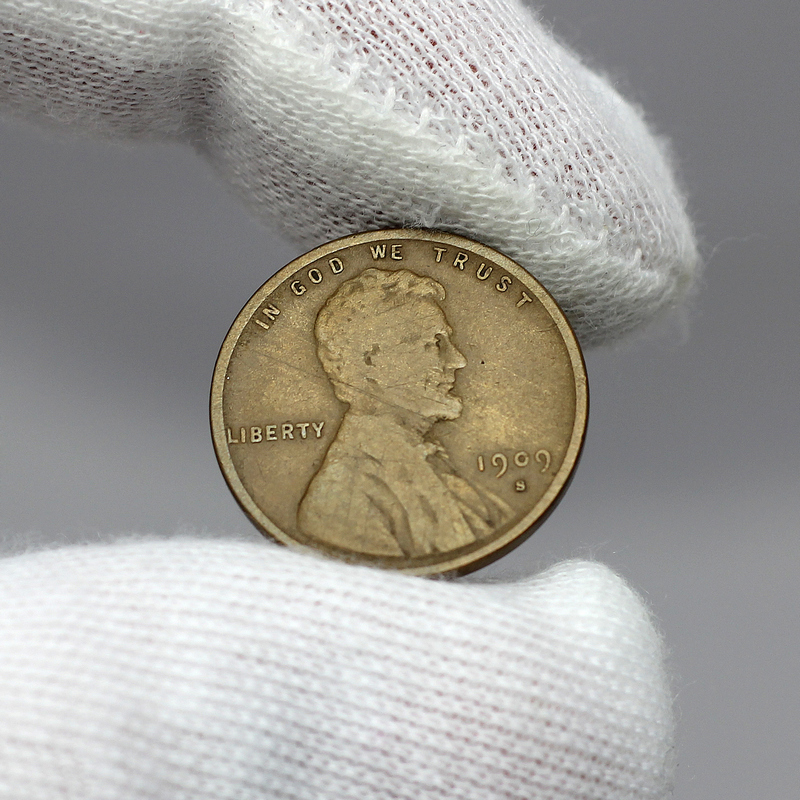
Value: $700 to over $50,000 depending on condition
The 1909-S VDB is one of the most iconic and desirable pennies in American history. Released the year the Lincoln cent was introduced, this coin carries the initials “VDB” of its designer, Victor David Brenner, on the reverse along the bottom rim. Public criticism quickly erupted over the prominent initials, and the U.S. Mint removed them shortly after.
Only 484,000 of these coins were minted in San Francisco—one of the lowest mintages of any regularly issued U.S. cent. Today, that scarcity makes the 1909-S VDB one of the most coveted pennies in circulation.
How to Identify It
- Look for the date 1909 on the obverse.
- Check for the “S” mintmark just below the date.
- On the reverse, look closely at the bottom rim for the tiny “VDB” initials.
Even worn examples often sell for hundreds of dollars, while high-grade versions can reach $50,000 or more.
2. The 1914-D Lincoln Wheat Penny
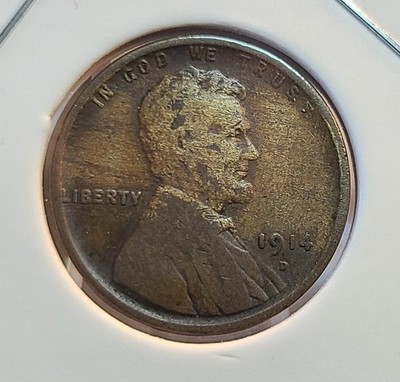
Value: $300 to over $15,000
Another major rarity, the 1914-D penny, was minted in Denver. With a circulation of just 1.1 million, it’s far more uncommon than most other Wheat pennies of its era. Over time, many of these coins were lost, damaged, or heavily worn, making well-preserved specimens extremely rare.
Collectors consider the 1914-D one of the “Big Key Dates” in the Lincoln series, and demand for this coin has never slowed.
How to Identify It
- Check for the 1914 date.
- Beneath it, look for the “D” mintmark.
- Authentic coins have a crisp date; beware of altered 1944 pennies modified to look like 1914-D.
Because even low-grade examples fetch hundreds of dollars, finding one in your change would be a remarkable stroke of luck.
3. The 1943 Copper Penny
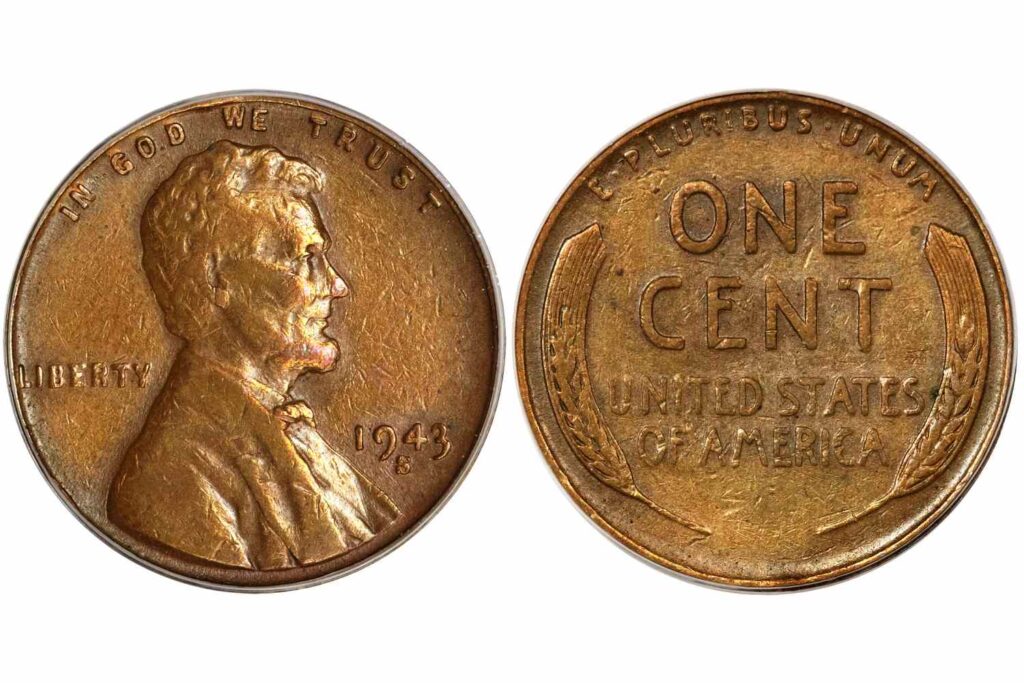
Value: $50,000 to over $300,000
Perhaps the most famous error penny in existence, the 1943 copper cent is the holy grail of loose-change discoveries.
During World War II, the U.S. Mint produced pennies out of zinc-coated steel to conserve copper for ammunition and military equipment. However, a small number of copper planchets from 1942 remained stuck inside the minting machinery. These stray copper blanks were struck the following year, producing the ultra-rare 1943 copper penny.
Only a couple dozen are confirmed to exist, making them one of the most valuable error coins in U.S. history.
How to Identify It
- The coin should read 1943 on the obverse.
- Genuine examples are copper colored, not silver-gray.
- The easiest test is the magnet test: a real 1943 copper penny will not stick to a magnet, while the common steel versions will.
If you ever find one of these in circulation, you’re looking at a coin worth more than a brand-new luxury car—or even a small house.
4. The 1955 Double Die Obverse Penny
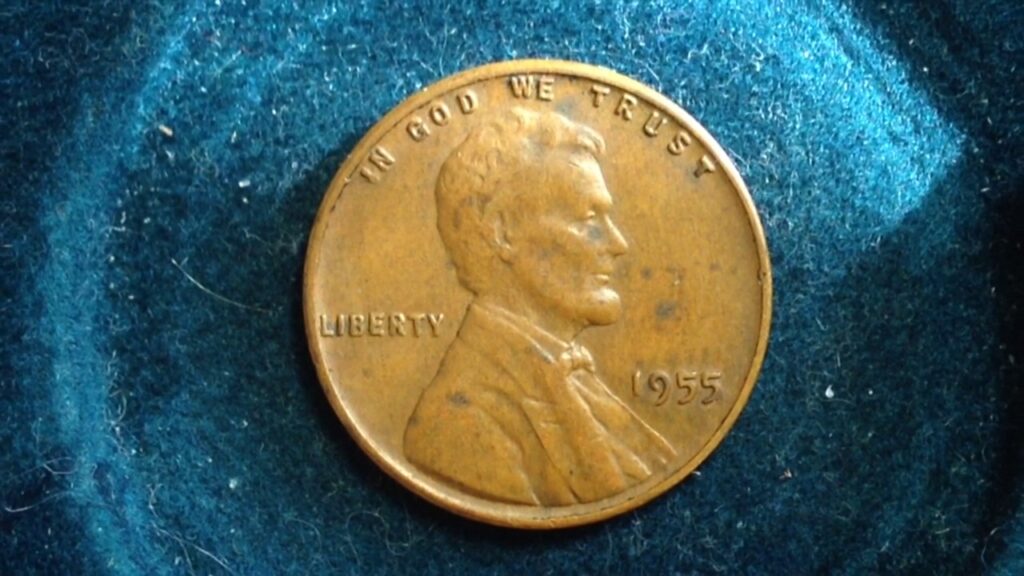
Value: $1,000 to $30,000
The 1955 double-die penny is one of the most dramatic and recognizable error coins the U.S. Mint ever produced. During the minting process, the die used to strike the coins received a misaligned second impression. As a result, the year, lettering, and “LIBERTY” appear clearly doubled on the obverse.
The mint accidentally released thousands of these double-die coins into circulation, mostly on the East Coast. Although many have been collected, a surprising number still pop up in old jars, bank rolls, and even pocket change.
How to Identify It
- Bold doubling of the date, “IN GOD WE TRUST,” and “LIBERTY.”
- The doubling is visible to the naked eye—not subtle.
Counterfeits are common, but genuine ones have unmistakable doubling that appears crisp, not blurry or stretched.
One lucky find of a 1955 double-die penny could net you thousands of dollars on the collector market.
5. The 1969-S Double Die Obverse Penny

Value: $20,000 to over $100,000
The 1969-S double-die penny is another extraordinary rarity that occasionally surfaces in circulation. With only a small number authenticated, its scarcity rivals that of the legendary 1955 double-die.
When the coin was first discovered, the U.S. Secret Service mistakenly thought it was counterfeit due to the extreme doubling. After investigations, the coins were declared legitimate—and the few known examples skyrocketed in value.
How to Identify It
- Strong doubling on the date, “LIBERTY,” and the motto.
- Look for the “S” mintmark, which distinguishes it from the scarce but less valuable 1969 double-die with no mintmark.
These coins can sell for tens of thousands of dollars, depending on condition.
Why These Rare Coins Still Appear in Circulation
You might wonder how pennies worth thousands—or hundreds of thousands—of dollars still show up in everyday change. Here are the reasons:
1. Old Coins Remain Legal Tender
People often inherit jars of pennies from relatives and unknowingly spend rare coins simply to get rid of them.
2. Bank Coin Machines Don’t Screen for Rarities
Coin-sorting machines measure weight and size, not rarity. Even a valuable penny can slip through unnoticed.
3. Few People Know What to Look For
Most people don’t examine their change carefully, so rare coins continue to circulate among the masses.
4. Some Coins Were Mass-Released Before Their Value Was Known
Many errors—like the 1955 or 1969-S double dies—only became famous years later.
How to Check Your Own Pennies for Value
Finding a rare penny doesn’t require fancy equipment. Start with these tools:
A Magnifying Glass
Used to spot mintmarks, doubling, and design details.
A Good Light Source
Helps reveal unusual features.
A Magnet
Essential for checking 1943 copper vs. steel cents.
Online Value Guides or Grading Services
PCGS and NGC offer reliable identification resources.
It’s worth taking a few minutes to look closely—many amazing discoveries come from simple curiosity.
Final Thoughts
Rare pennies are more than old bits of metal; they’re pieces of American history with stories, secrets, and surprises hidden within their tiny frames. Some of these coins are so scarce and valuable that finding one is like striking gold—literally. Yet they continue to appear in the most ordinary places: jars, drawers, checkout counters, and bank rolls.
So the next time you receive change, don’t overlook those humble copper coins. You might just be holding a penny worth more than gold.