Every collector hopes for that once-in-a-lifetime discovery — the kind of coin that transforms a casual pocket-change find into a small fortune. Among the most coveted U.S. coins ever released into circulation, the 1955 Double Die Lincoln Cent stands at the top of the list. This famous error coin has captured imaginations for decades, and today, pristine examples can sell for $200,000 or more at major auctions.
What makes this penny so legendary? How did a minting mistake turn an ordinary one-cent coin into a six-figure treasure? And most importantly — how can you tell if you have one?
This in-depth guide explores the history, value, diagnostics, and distinguishing features of the 1955 Doubled Die Penny so you can identify the real thing and avoid the many counterfeits that exist.
A Minting Mistake That Made History
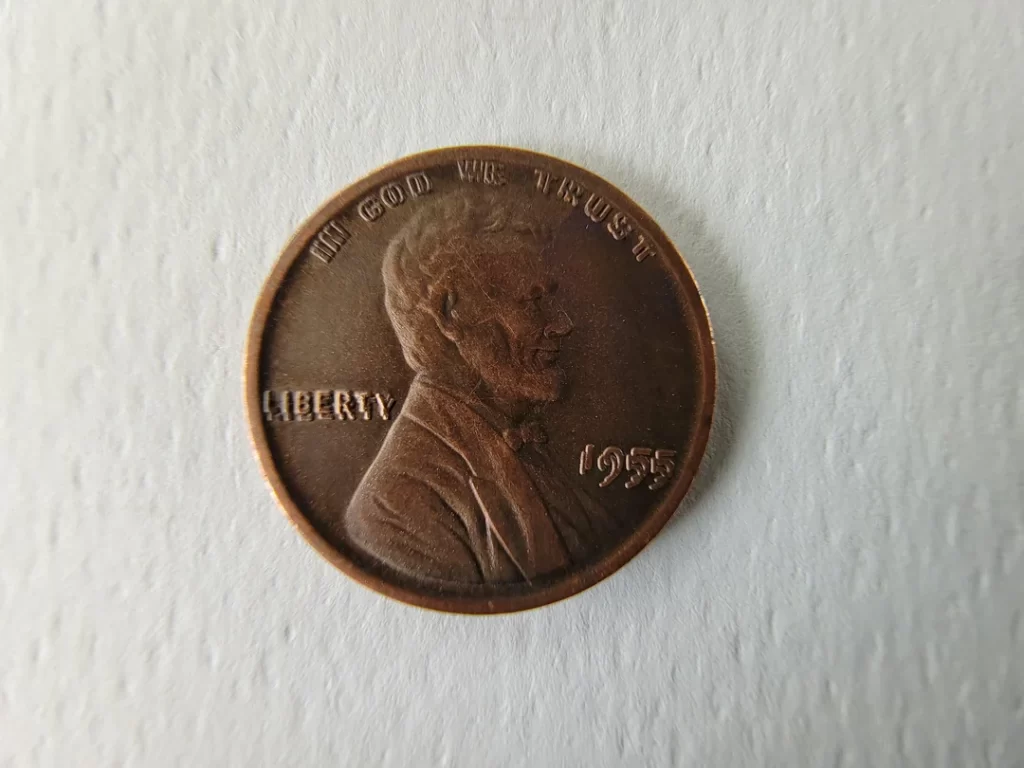
The 1955 Doubled Die Obverse (DDO) cent was created during a late-night coining operation at the Philadelphia Mint. In the mid-20th century, dies were manufactured by impressing the design into a blank die multiple times. If the alignment between impressions was off by even a slight degree, the resulting die could produce coins with a doubled image.
That is exactly what happened in 1955.
According to mint records and numismatic research, the doubling occurred when the obverse die — the one with Lincoln’s portrait — received a second impression misaligned from the first. This created a bold and unmistakable spread doubling on the date and lettering.
But instead of being caught and destroyed, the defective die was accidentally used to strike tens of thousands of pennies.
Even more remarkable is how they entered circulation. While packaging cents for distribution, mint workers mixed bags of the doubled coins with normal ones. The batch was shipped out before anyone realized what had happened. By the time collectors discovered the error, many of these coins were already in everyday use — tucked into pockets, spent in stores, or stored in jars across America.
That accidental release created one of the most iconic and valuable error coins in U.S. history.
Why the 1955 Doubled Die Penny Is So Valuable

Collectors place enormous value on this coin for several reasons:
1. The Doubling Is Dramatic and Easy to See
Not all doubled dies are obvious. Some require magnification. But the 1955 DDO is dramatic. The doubling is bold enough that people in the 1950s noticed it with the naked eye when spending them in grocery stores.
2. It’s One of the Most Famous Error Coins Ever Produced
The coin quickly gained notoriety. Newspaper articles, coin magazines, and collectors’ letters circulated warnings that a strange “double-print penny” had appeared. Word spread nationally, and the coin became an instant collectible.
3. Limited Quantity Exists Today
Estimates suggest 20,000 to 24,000 were originally struck. Many were lost, damaged, or spent repeatedly before their value became known. Today, only a fraction exists in collectible condition.
4. High-Grade Examples Are Extremely Scarce
Because the coins circulated before they were recognized as special, most surviving examples show wear. Coins in mint state (MS) condition are exceedingly rare and can command prices of $100,000 to $250,000 at auction.
5. Demand Has Never Diminished
From novice coin hunters to elite collectors, the 1955 DDO is considered a “must-have” key variety. Its popularity keeps prices strong and rising every decade.
How Much Is a 1955 Double Die Penny Worth?
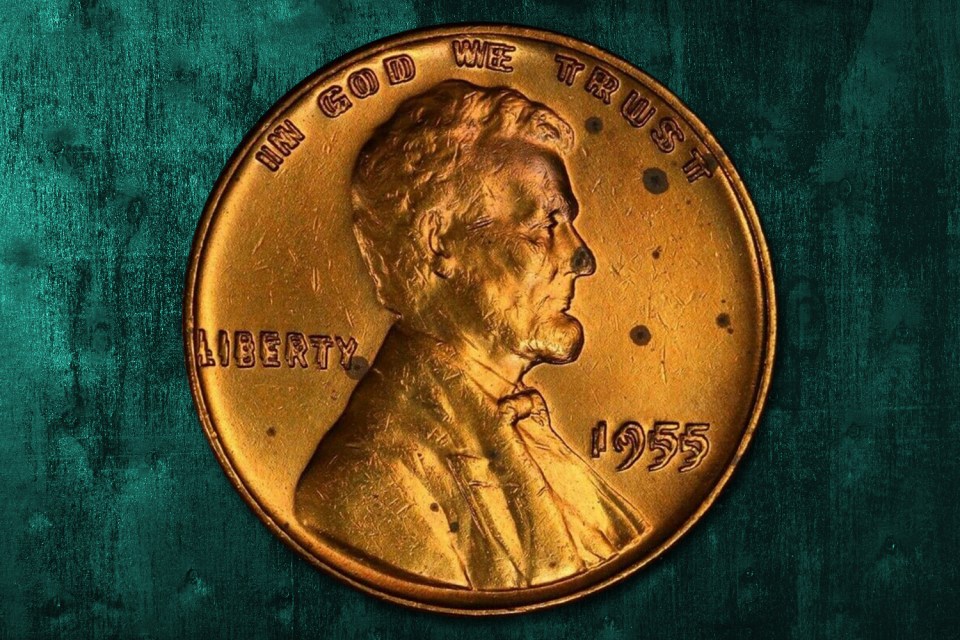
Values vary depending on the coin’s condition. Here’s a general guide:
- Heavily circulated (Good–Fine): $1,000 – $2,500
- Lightly circulated (VF–XF): $3,000 – $10,000
- About Uncirculated (AU): $12,000 – $25,000
- Mint State (MS60–MS63): $35,000 – $80,000
- Gem Mint State (MS64–MS65): $100,000 – $200,000+
- Top-graded examples: Can exceed $250,000
Condition plays a massive role in pricing because sharp details and clean surfaces bring premium bids at auctions.
How to Identify a Genuine 1955 Double Die Penny
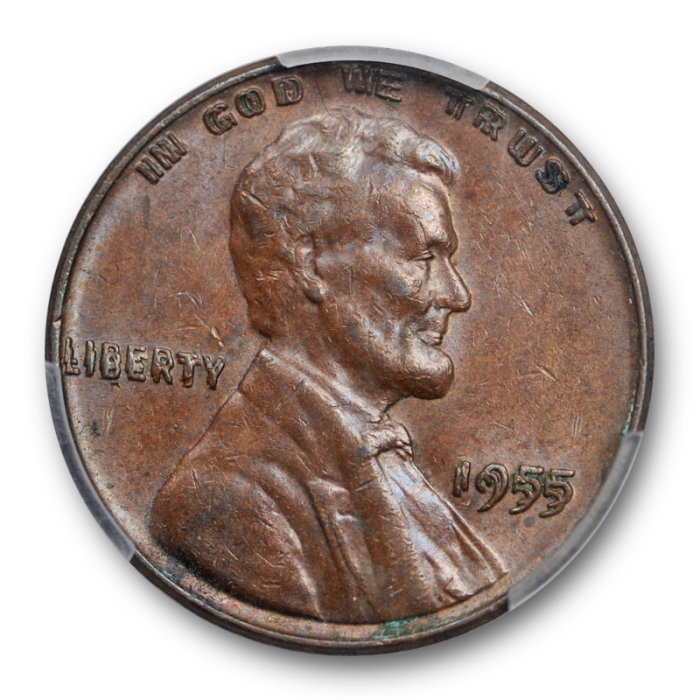
Spotting the 1955 DDO is easy once you know what features to look for. The doubling on this coin is among the most dramatic of any U.S. cent.
Here are the unmistakable markers:
1. Strong Doubling on the Date “1955”
This is the most famous diagnostic.
You’ll see:
- Two clearly separated impressions of each digit
- Thick, shadowed edges
- The appearance of a “double-printed” date
If the doubling is not bold and dramatic, the coin is not the true 1955 DDO — it may be a mechanical doubling (worth almost nothing).
2. Doubling on “LIBERTY”
This part of the design shows some of the most dramatic doubling:
- Every letter of “LIBERTY” appears doubled
- The effect is strong, clear, and widely spaced
- The doubling is sharp — not smeared, not flat
This is often the easiest place to confirm authenticity.
3. Doubling on “IN GOD WE TRUST”
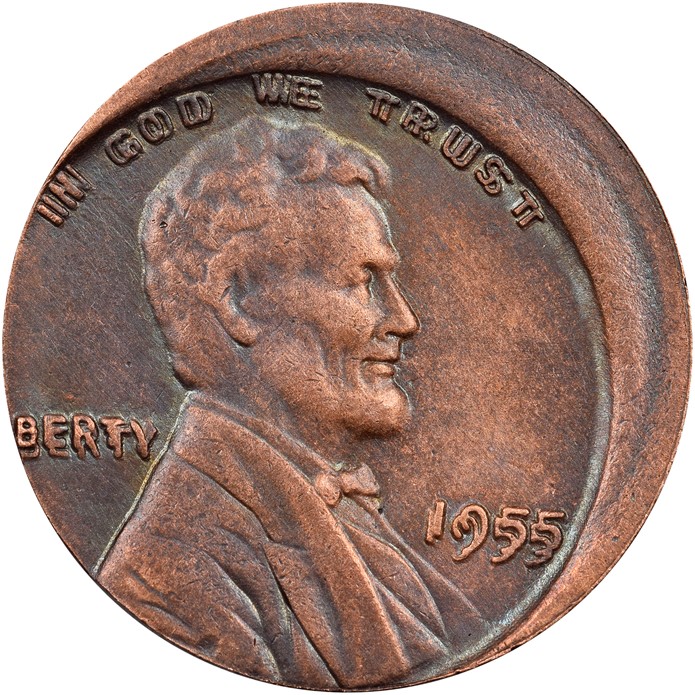
The motto also exhibits clear doubling, especially on:
- The letters I, N, and G
- The word GOD
- The letters W and E
The spread can be almost as bold as the date doubling.
4. No Doubling on the Reverse
Only the obverse die was doubled. The reverse die was normal.
If you see doubling on both sides, it is likely mechanical doubling or a fake.
Common Misidentifications and How to Avoid Them
Because the 1955 Doubled Die Penny is so valuable, countless fakes and look-alikes exist. Here’s what to be careful about:
1. Mechanical Doubling (Machine Doubling)
This is the most common cause of confusion.
Mechanical doubling:
- Looks flat and shelf-like
- Has no separation between images
- Reduces detail instead of strengthening it
These coins have no added value.
2. “Poor Man’s Double Die” — A Common Misleading Variety
You may hear about a cheaper coin sometimes called the “Poor Man’s 1955 Double Die.”
This is caused by die deterioration, not true doubling.
It usually features:
- Slight blurring on the last two digits of the date
- No strong doubling on letters
- No sharp separation
These coins typically sell for $1–$5. They are not the real doubled die.
3. Altered or Counterfeit Coins
Some counterfeiters try to engrave or manipulate doubling into the date or letters. These examples usually show:
- Irregular cuts
- Tool marks under magnification
- Inconsistent font shapes
If you suspect a fake, always get the coin authenticated.
4. Copycats Missing Important Diagnostics
Any real 1955 DDO must also match:
- The correct die markers
- The correct die scratches
- The correct relief levels
There is only one known doubled die obverse for 1955 — so diagnostics are well documented.
Why This Penny Is So Popular Among Collectors
The 1955 Doubled Die is not just a rare coin — it is a cultural icon in numismatics. Here’s why collectors love it:
1. The Story
A shocking mint error released into everyday change captures attention like few things can.
2. The Visual Impact
Most coin errors are subtle. This one is dramatic and instantly noticeable.
3. The Challenge of Finding One
Even though millions of people searched their cents in the 1950s and 1960s, only a small number were discovered.
4. It’s a Key Variety in the Lincoln Cent Series
Collectors who build a complete Lincoln cent set consider the 1955 DDO as essential as the 1909-S VDB or the 1914-D.
How to Tell if You Have the Real Thing
If you suspect you have a 1955 double die cent:
- Check for the strong doubling on the date.
- Inspect LIBERTY and the motto for bold, clear doubling.
- Verify that the reverse is normal.
- Use a 5x–10x magnifier to check for die markers.
- Compare your coin to authenticated examples.
- Submit it to a certification service (PCGS or NGC).
Professional authentication greatly increases both confidence and resale value.
Final Thoughts
The 1955 Double Die Lincoln Cent remains one of the most electrifying discoveries in American numismatics. With dramatic doubling, a famous backstory, and incredible value — including mint-state examples selling for as much as $200,000 — it represents the perfect blend of rarity, history, and collectability.
Whether you’re a seasoned numismatist or a casual coin enthusiast, the chance of finding one makes every penny worth checking. You never know: a forgotten coin jar, an inherited collection, or a simple handful of old cents might hold a six-figure treasure.
If you’d like, I can also create: