Watermelons are the crown jewel of any summer garden—sweet, juicy, and irresistible. But growing them can be tricky. They take up a lot of space, require strong support, and are often vulnerable to pests, rotting, and uneven growth. But what if you could grow watermelons suspended in the air? Sounds futuristic, right? Yet this method has become a revolutionary technique for maximizing yield, improving fruit quality, and saving garden space.
Suspended watermelon cultivation is not only practical—it’s fascinating to watch. Your melons dangle gracefully, safe from ground pests, while receiving proper support and air circulation. In this complete guide, we’ll explore why suspended watermelons are the future of home gardening, how to grow them, and all the essential tips to get perfectly shaped, juicy melons right at home.
🌱 Why Grow Watermelons Suspended?
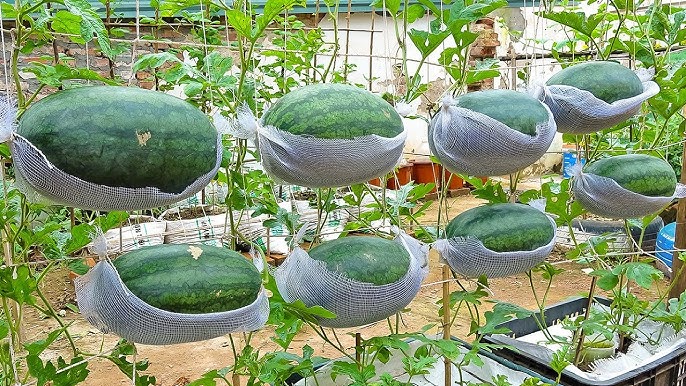
Traditional watermelon cultivation requires large patches of soil, sprawling vines, and careful attention to prevent fruit rot or pest damage. Suspended watermelons eliminate many of these challenges. Here’s why:
1. Space Efficiency
Instead of sprawling across the ground, the vines grow vertically on trellises or hanging structures. Perfect for small gardens, balconies, or rooftop gardens.
2. Improved Air Circulation
Suspended melons get excellent airflow, reducing the risk of fungal infections, powdery mildew, or rot that often affect ground-grown fruits.
3. Reduced Pest Problems
Keep melons off the ground and away from crawling pests like slugs, snails, and soil-borne insects.
4. Healthier, Juicier Fruit
Suspended watermelons receive uniform sunlight and grow without pressure on one side, leading to perfectly round, evenly ripened fruits.
5. Easier Harvesting
With proper support, the fruits hang at a convenient height for harvesting without bending or kneeling.
🛠 Step 1: Choosing the Right Watermelon Variety

Not all watermelons are suitable for vertical growth. For suspended cultivation, choose smaller, compact, or medium-sized varieties that don’t become too heavy for supports.
Recommended Varieties:
- Sugar Baby
- Icebox
- Crimson Sweet (small-medium type)
- Mini Love or personal-sized melons
Tip:
Avoid very large melons weighing 15–20 kg unless you are prepared to build extremely strong support systems. For home gardeners, fruits under 5–6 kg are ideal.
🌿 Step 2: Prepare Your Vertical Support
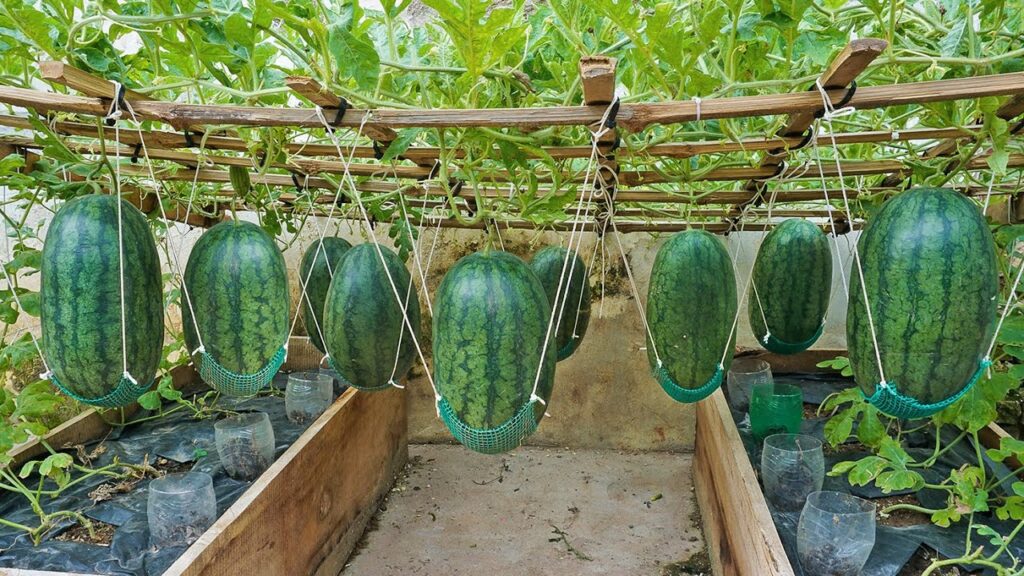
The heart of suspended watermelon cultivation is a sturdy trellis or hanging system.
Options for Support:
- Trellis:
- Construct a wooden or metal frame.
- Vertical or A-frame structures work best.
- Hanging Nets or Slings:
- Use soft fabric, mesh, or old stockings to cradle the fruit.
- Supports the watermelon’s weight and prevents deformation.
- Ropes and Hooks:
- Secure the melon gently to the trellis using natural fiber ropes.
Tip: Each melon must be supported individually to avoid tearing the vine.
🌱 Step 3: Soil and Planting Preparation
Watermelons are heavy feeders and need nutrient-rich soil.
Ideal Soil Mix:
- 40% garden soil or topsoil
- 30% compost
- 20% coco peat or peat moss
- 10% sand or perlite for drainage
Planting Steps:
- Select a sunny location (6–8 hours sunlight).
- Dig a hole twice the root ball size.
- Mix compost with the soil for extra nutrients.
- Plant watermelon seedlings carefully.
- Water generously after planting.
💧 Step 4: Watering and Feeding
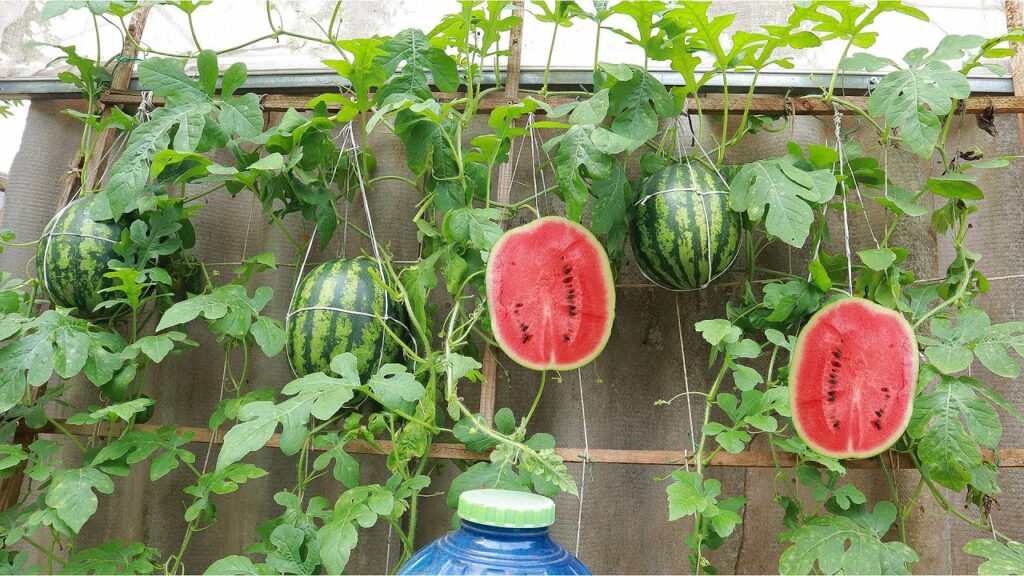
Watermelons are thirsty plants. Maintaining consistent moisture is key for juicy fruit.
Watering Tips:
- Deep watering 2–3 times a week.
- Keep soil consistently damp but not waterlogged.
- Avoid overhead watering to reduce fungal infections.
Fertilizer Tips:
- Start with high-nitrogen fertilizer for vine growth.
- Switch to phosphorus and potassium once flowers appear for fruit development.
- Organic options: compost tea, fish emulsion, or bone meal.
🌸 Step 5: Pollination and Flower Care
Watermelons produce both male and female flowers. Pollination is essential for fruit formation.
Tips for Successful Pollination:
- Attract bees and pollinators with companion plants like marigold or sunflower.
- Hand-pollinate using a small brush if pollinator activity is low.
- Remove excess flowers to focus energy on fewer fruits for better quality.
🪢 Step 6: Supporting the Fruit
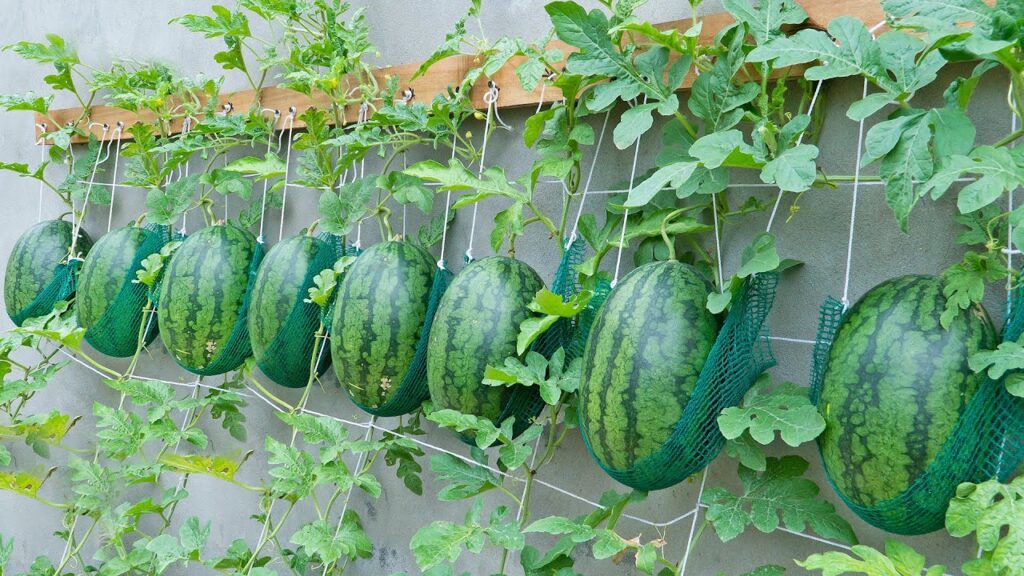
As watermelons grow, the weight increases and can damage the vine. Here’s how to support suspended melons:
1. Fruit Slings:
- Use netting, fabric, or pantyhose to cradle the growing watermelon.
- Tie the sling gently to the trellis.
2. Adjust Regularly:
- Check weekly to ensure the fruit is not rubbing against supports.
- Make adjustments as the melon grows.
3. Avoid Sharp Edges:
- Prevent tears in the rind by using soft materials for slings and tying.
🌞 Step 7: Sunlight and Temperature
Watermelons thrive in warm, sunny conditions.
Ideal Conditions:
- Temperature: 21–30°C (70–86°F)
- Full sun exposure
- Good airflow
Tip: If growing indoors or in a greenhouse, rotate vines for even sunlight distribution.
🌿 Step 8: Pest and Disease Management
Suspended watermelons reduce ground pest problems, but vigilance is still needed.
Common Issues:
- Aphids and whiteflies (spray neem oil or insecticidal soap)
- Powdery mildew (prune leaves for airflow, apply sulfur if needed)
- Ants or fruit flies (keep area clean)
Regular inspection ensures healthy, beautiful fruits.
🌱 Step 9: Harvesting Suspended Watermelons
Harvesting time is critical to get sweet, juicy melons.
Signs of Ripeness:
- Deep green color with characteristic stripes
- Yellowish underside where the fruit touches the ground (even if suspended, this color may appear from sun exposure)
- Hollow sound when tapped gently
- Dried tendril near the fruit
How to Harvest:
- Cut carefully with a sharp knife.
- Keep the vine intact if you plan to grow additional fruits.
Suspended watermelons are easier to pick at a convenient height, reducing strain and preventing damage.
🌟 Step 10: Benefits You’ll Enjoy
Suspended watermelon gardening offers incredible rewards:
- Larger, evenly shaped fruits
- Juicy, sweet flavor due to stress-free growth
- Cleaner melons free from dirt and rot
- Efficient use of vertical space
- Reduced risk of pests and diseases
With proper care, your suspended watermelon system can be used year after year, making it a sustainable, innovative gardening practice.
🌸 Final Thoughts
Growing watermelons suspended in the air is a game-changer for gardeners. It’s a clever way to maximize space, protect your plants, and ensure high-quality, juicy fruit every time. With vertical supports, proper care, and gentle slings, your watermelons will thrive like never before.
Whether you have a backyard, a balcony, or limited space, this technique allows you to enjoy the satisfaction of growing impressive, healthy melons at home. It’s fun, rewarding, and the results are delicious—juicy watermelon straight from your very own suspended garden!