For coin collectors around the world, few pieces of American currency command as much fascination — and value — as the 1909-S VDB Lincoln Cent. Struck more than a century ago, this small copper coin marked a turning point in U.S. minting history and went on to become one of the most iconic and sought-after coins in existence. With pristine examples selling for over $800,000, the 1909-S VDB penny isn’t just a collector’s dream — it’s a symbol of artistry, controversy, and enduring historical significance.
But what exactly makes this penny so special? Why did its creator’s initials cause a national stir? And how can you tell if you’ve stumbled upon one of these rare treasures? Let’s dive into the story behind the 1909-S VDB Lincoln cent — the coin that changed American numismatics forever.
The Birth of the Lincoln Cent
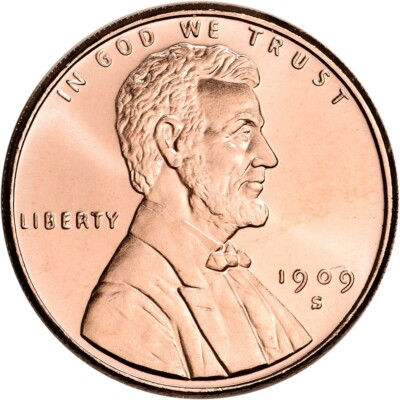
The Lincoln cent made its debut in 1909, commemorating the 100th anniversary of Abraham Lincoln’s birth. Before this, U.S. coins had typically featured allegorical figures like Liberty rather than real historical figures. President Theodore Roosevelt, who was determined to make American coins more artistic and dignified, personally commissioned sculptor Victor David Brenner to design a new one-cent piece featuring Lincoln’s likeness.
Brenner, a talented Lithuanian-born engraver, had previously created a bronze plaque of Lincoln that caught Roosevelt’s attention. The president admired the design’s realism and emotional depth, believing Lincoln’s image would inspire pride and unity among Americans.
The result was the Lincoln Wheat Cent, featuring a detailed portrait of Abraham Lincoln on the obverse (front) and two wheat ears framing the denomination “ONE CENT” on the reverse. This was the first U.S. coin to depict an actual historical figure — a tradition that continues to this day.
The “VDB” Controversy
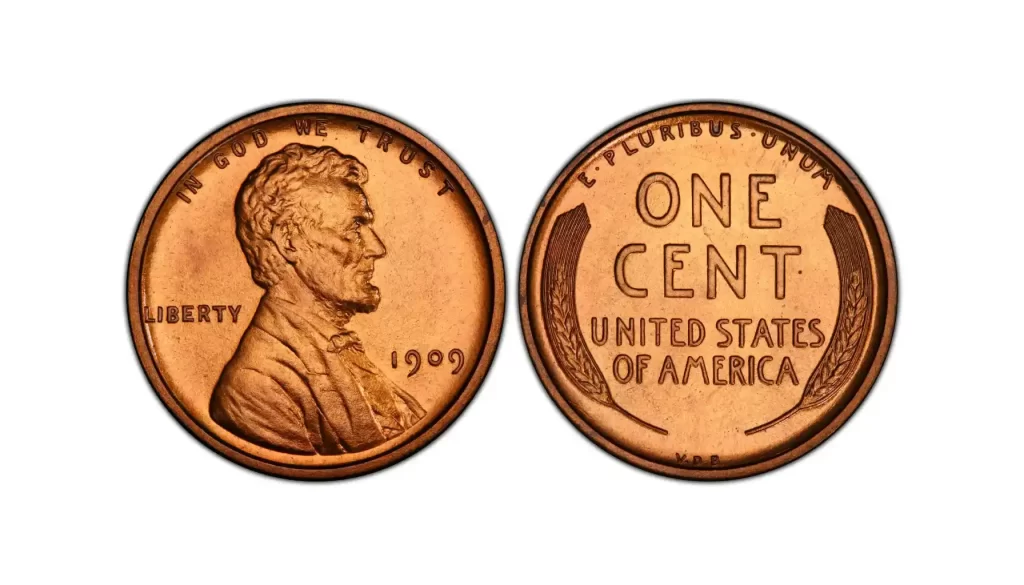
Victor David Brenner, proud of his design, placed his initials — V.D.B. — prominently at the bottom center of the reverse side of the coin. At first, few paid attention. But when the coin entered circulation in August 1909, public opinion quickly turned.
Critics, newspapers, and even some government officials accused Brenner of self-promotion, arguing that his initials were too large and too noticeable. While artists had signed coins before, the visibility of “V.D.B.” sparked a controversy that forced the U.S. Mint into quick action.
Just weeks after the coin’s release, the Mint ordered the initials removed. Future Lincoln cents would bear only a small “VDB” on the shoulder truncation of Lincoln’s portrait (on the obverse side), where it remains today.
This seemingly minor change created a massive rarity — because only a limited number of the original 1909 pennies with the “VDB” initials were ever struck before the design was altered.
The “S” Mint Mark and Its Significance
While millions of 1909 VDB cents were struck at the Philadelphia Mint, which did not use a mint mark, a much smaller number were produced at the San Francisco Mint, bearing the letter “S” below the date on the obverse.
- The Philadelphia Mint produced 27,995,000 of the 1909 VDB cents.
- The San Francisco Mint, however, struck only 484,000 1909-S VDB cents.
That difference in mintage — fewer than half a million coins — is what makes the 1909-S VDB so rare. It’s one of the lowest mintages in the entire Lincoln cent series, and because of the controversy and short production run, the coins were pulled from circulation almost immediately.
Many were saved by collectors who recognized their potential value early on, but most circulated examples were lost, damaged, or worn beyond recognition.
Why It’s Worth Over $800,000
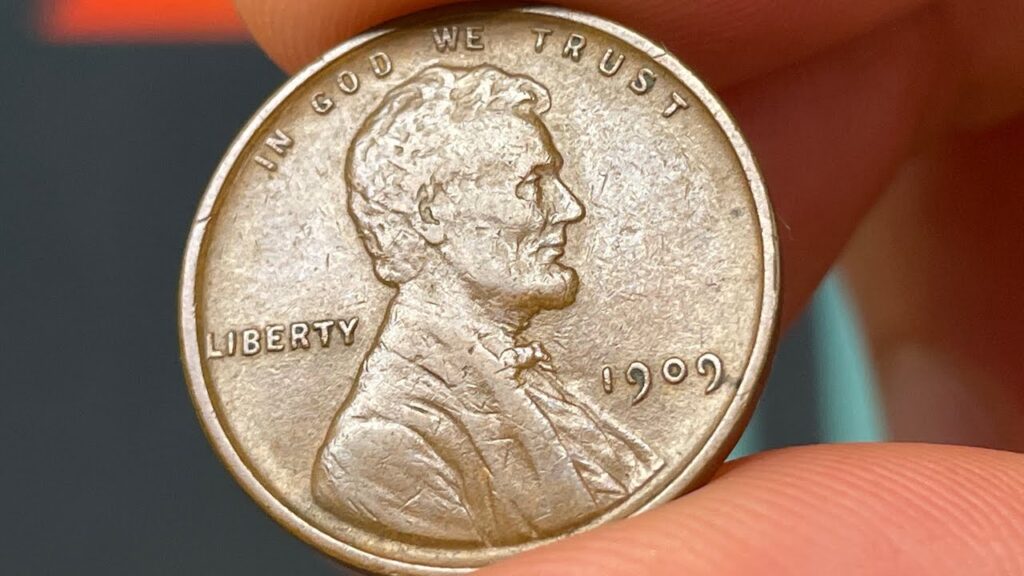
The 1909-S VDB penny’s value is determined by a combination of rarity, condition, demand, and historical importance.
- Rarity – With fewer than 500,000 originally minted and far fewer surviving in top condition, the coin is extremely scarce.
- Historical Context – As the very first year of the Lincoln cent and the only year with Brenner’s full initials, the coin has an unmatched place in U.S. minting history.
- Collector Demand – Every serious Lincoln cent collector needs one to complete their collection. Because of this, demand consistently exceeds supply.
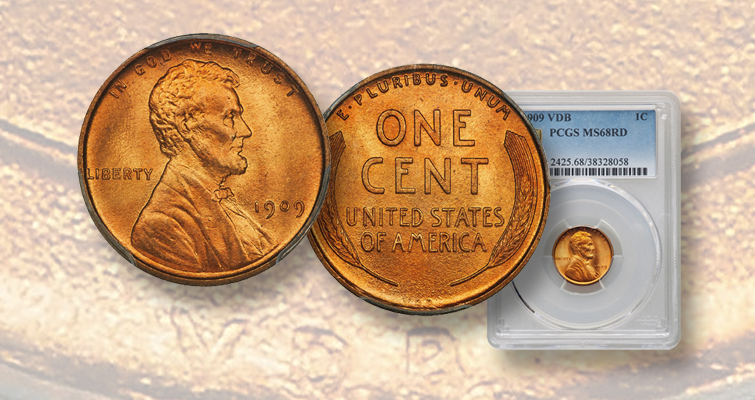
- Condition (Grade) – The most pristine, uncirculated examples — especially those graded MS67 Red or better — command astronomical prices.
In 2022, a PCGS-certified 1909-S VDB Lincoln Cent graded MS67+ RD (Red) sold for more than $840,000 at auction, setting a record for this iconic coin. Even moderately circulated versions can bring $700 to $2,000, depending on eye appeal and color.
How to Identify a Genuine 1909-S VDB

Because of its value, the 1909-S VDB penny has been heavily counterfeited and altered over the decades. To tell if your coin might be genuine, look for the following key features:
- Check the Mint Mark
- The “S” mint mark should appear below the date on the front of the coin.
- It must be clearly defined and have the correct shape — slightly rounded and evenly struck.
- Many counterfeits are made by adding a fake “S” to a common 1909 VDB penny from Philadelphia. Under magnification, you can often see tool marks or uneven surfaces where the mint mark was added.
- Inspect the Initials
- On authentic examples, “V.D.B.” is centered between the two wheat stalks on the reverse side.
- The letters should be sharp, evenly spaced, and not overly raised.
- Weight and Metal Composition
- Genuine 1909-S VDB pennies are 95% copper and weigh 3.11 grams.
- Counterfeits made from plated steel or other metals will differ slightly in weight and tone.
- Professional Authentication
- Given the high number of fakes, it’s best to have your coin authenticated by a major grading service such as PCGS (Professional Coin Grading Service) or NGC (Numismatic Guaranty Company).
- These organizations will confirm authenticity, assign a grade, and encapsulate the coin in a tamper-proof holder — ensuring its long-term value.
The Grades and Colors That Affect Value
Lincoln cents are often described by their color designation, which indicates how much of the original mint luster remains:
- RD (Red) – Bright copper color, full mint luster, extremely valuable.
- RB (Red-Brown) – Partial red with some brown toning, still highly desirable.
- BN (Brown) – Fully toned brown, typically less valuable but still collectible.
Condition plays a huge role in price differences:
- Good (G-4) – $700–$900
- Fine (F-12) – $1,000–$1,200
- Extremely Fine (EF-40) – $1,500–$2,000
- Uncirculated (MS60–MS65) – $3,000–$50,000
- Superb Gem (MS67+ RD) – $700,000 to $850,000+
These values fluctuate depending on the coin market and collector demand, but the trend for top-grade examples continues to rise year after year.
Fun Fact: Some Were Saved by Chance
In 1909, when the Lincoln cent first appeared, Americans were fascinated by the new design. Banks and stores were flooded with customers asking for rolls of the new coins. Word spread quickly that the Mint was discontinuing the VDB version, prompting collectors to set aside as many as they could.
Ironically, this early hoarding is the reason any 1909-S VDB cents survived at all. Many of the best-preserved examples today were stored untouched in coin envelopes or glass jars by ordinary citizens — people who had no idea their spare change would one day be worth more than a house.
Why Collectors Love It
The 1909-S VDB penny isn’t just valuable because it’s rare — it also marks a milestone in American design, culture, and coinage philosophy. It was the first U.S. coin to celebrate a real person, representing a shift from classical imagery to national heroes.
Collectors also appreciate the human story behind it — the talented immigrant artist whose initials caused such controversy, the political debates of the early 20th century, and the sudden recall that turned a common coin into a collector’s legend.
It’s a coin that embodies American history in miniature form, telling a story of art, pride, and national identity that resonates to this day.
Modern Legacy and Collecting Tips
Even more than a century later, the 1909-S VDB remains one of the most desirable coins in the Lincoln cent series, which has now been in continuous production for over 115 years.
If you’re new to collecting, here are some simple tips:
- Start with Knowledge – Learn about mint marks, varieties, and how to identify key dates.
- Buy Graded Coins – Always purchase authenticated coins from trusted dealers or auction houses.
- Handle Carefully – Never clean a coin, as it can dramatically reduce its value.
- Store Properly – Keep coins in protective holders and away from humidity.
Even a lower-grade 1909-S VDB can be a crown jewel in a small collection, while a top-grade example represents a lifetime investment.
Final Thoughts
The 1909-S VDB Lincoln Cent isn’t just another piece of pocket change — it’s a cultural treasure, a symbol of innovation, and a tangible link to America’s past. Its $800,000 price tag may grab headlines, but its real worth lies in the story it tells: of a nation honoring its greatest president, of an artist’s pride, and of how a few letters — “V.D.B.” — could transform an ordinary penny into one of the world’s most famous coins.
So, the next time you sift through an old jar of change or inherit a collection, take a closer look at those worn brown cents. You might just be holding a tiny piece of American history — and perhaps, a fortune in copper.