Hidden in plain sight, tucked among the common coins rattling in your pocket or stored away in old coffee tins and jars, could lie a fortune disguised as a penny. Among the most coveted treasures in American numismatics, the 1914-D Lincoln Wheat Penny stands out as one of the rarest and most valuable coins ever struck for circulation. While it originally had a face value of just one cent, pristine examples have sold for tens — even hundreds — of thousands of dollars.
If you’ve ever wondered whether a simple coin could change your financial luck, this century-old penny might just do it. Here’s everything you need to know about the legendary 1914-D Wheat Penny, why it’s so valuable, and how you can tell if you’ve got one in your change.
The Story Behind the 1914-D Wheat Penny
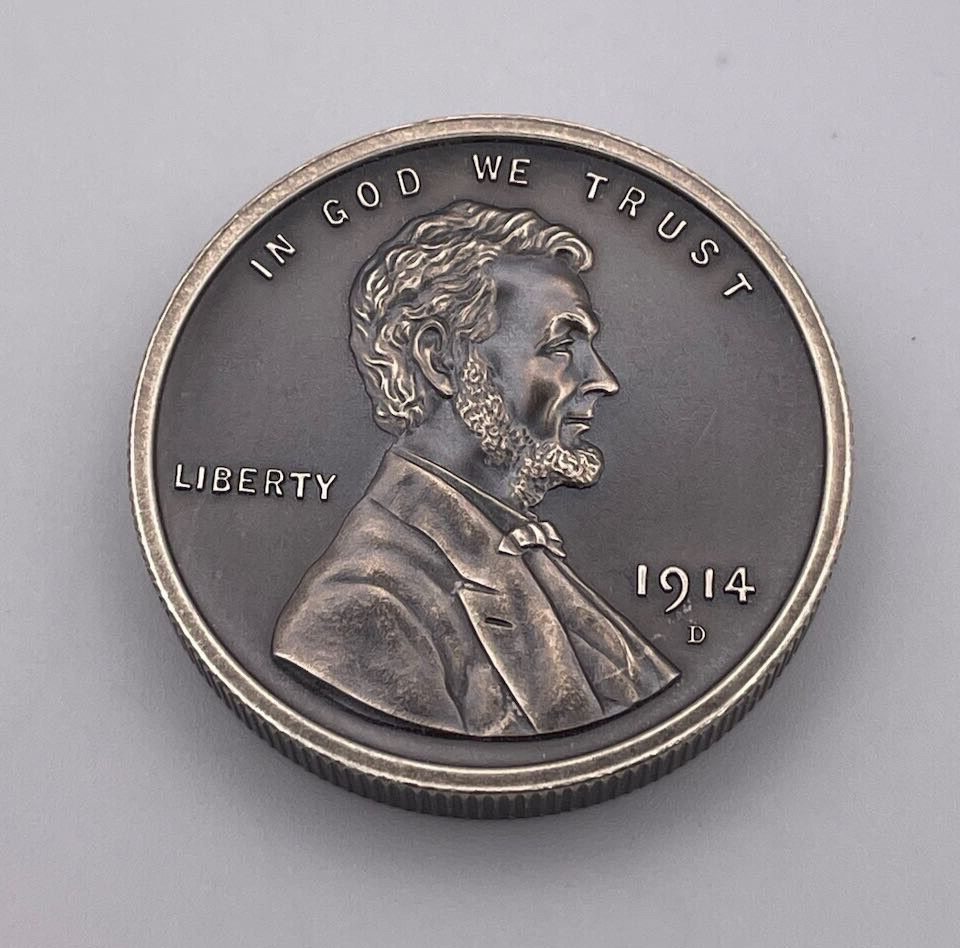
The 1914-D penny is part of the Lincoln Wheat Cent series, a coin that made its debut in 1909 to celebrate the 100th anniversary of Abraham Lincoln’s birth. Designed by sculptor Victor David Brenner, the Lincoln cent was the first U.S. coin to feature a real historical figure — a revolutionary idea at the time.
On the obverse (front), the coin features Lincoln’s bust with the motto “IN GOD WE TRUST” above, “LIBERTY” to the left, and the year of issue to the right. The reverse (back) shows two wheat stalks curving around the words “ONE CENT” and “UNITED STATES OF AMERICA,” giving the coin its nickname: the Wheat Penny.
The Lincoln Wheat series ran from 1909 until 1958, after which it was replaced by the Lincoln Memorial reverse. But within those years, some specific dates and mint marks became incredibly rare — and none more so than the 1914-D.
Why the 1914-D Penny Is So Rare
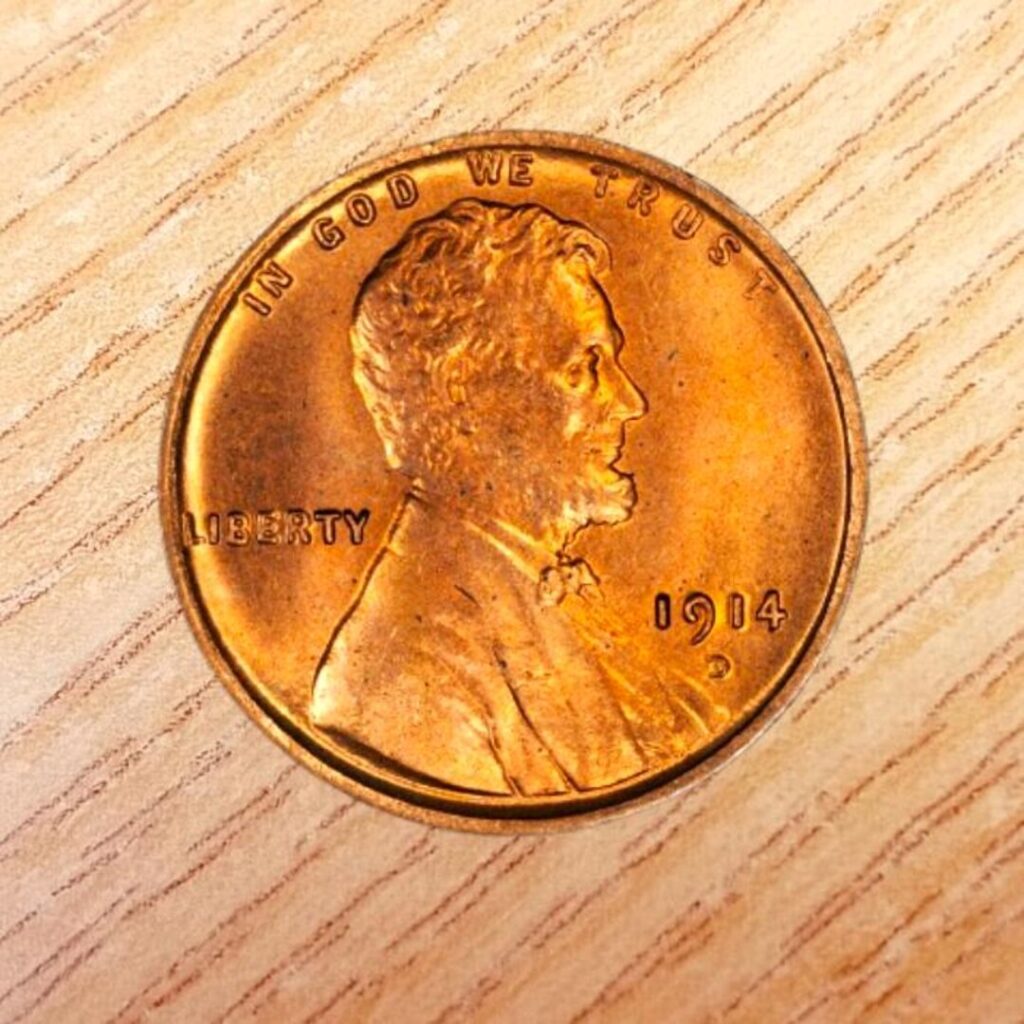
The letter “D” below the date on this coin identifies it as having been minted at the Denver Mint in Colorado. During that year, the Denver Mint struck only 1,193,000 Lincoln cents — a remarkably low number compared to other years. For perspective, the Philadelphia Mint produced over 75 million pennies that same year.
Low mintage alone might have made the 1914-D penny scarce, but what truly sealed its fate as a rarity was how few were saved. In the early 20th century, coin collecting wasn’t nearly as widespread as it is today. People didn’t think to preserve common coins by date or mint mark. Most 1914-D cents went straight into circulation and stayed there for decades, wearing down from everyday use.
By the time collectors began realizing how rare this particular coin was, very few uncirculated examples remained. Today, it’s estimated that fewer than 10,000 exist in collectible condition — and only a handful in pristine “gem” quality.
How Much Is a 1914-D Wheat Penny Worth?
Values for the 1914-D penny vary widely depending on its condition, but even the most worn examples can fetch significant sums.
Here’s a general breakdown:
| Grade (Condition) | Description | Estimated Value (USD) |
|---|---|---|
| Good (G-4) | Heavily worn but readable date and mint mark | $200–$300 |
| Very Fine (VF-20) | Moderate wear, strong details | $700–$1,000 |
| Extremely Fine (EF-40) | Slight wear, clear details | $1,500–$2,500 |
| About Uncirculated (AU-50) | Minimal wear, sharp features | $3,000–$5,000 |
| Mint State (MS-60 to MS-65) | No wear, original luster | $10,000–$30,000 |
| Gem Red (MS-66+) | Top-grade, full red copper color | $50,000–$200,000+ |
In 2018, a 1914-D Wheat Penny graded MS66 Red by PCGS (Professional Coin Grading Service) sold at auction for $158,625. In the world of coin collecting, condition — and especially color — is everything.
Why Condition and Color Matter
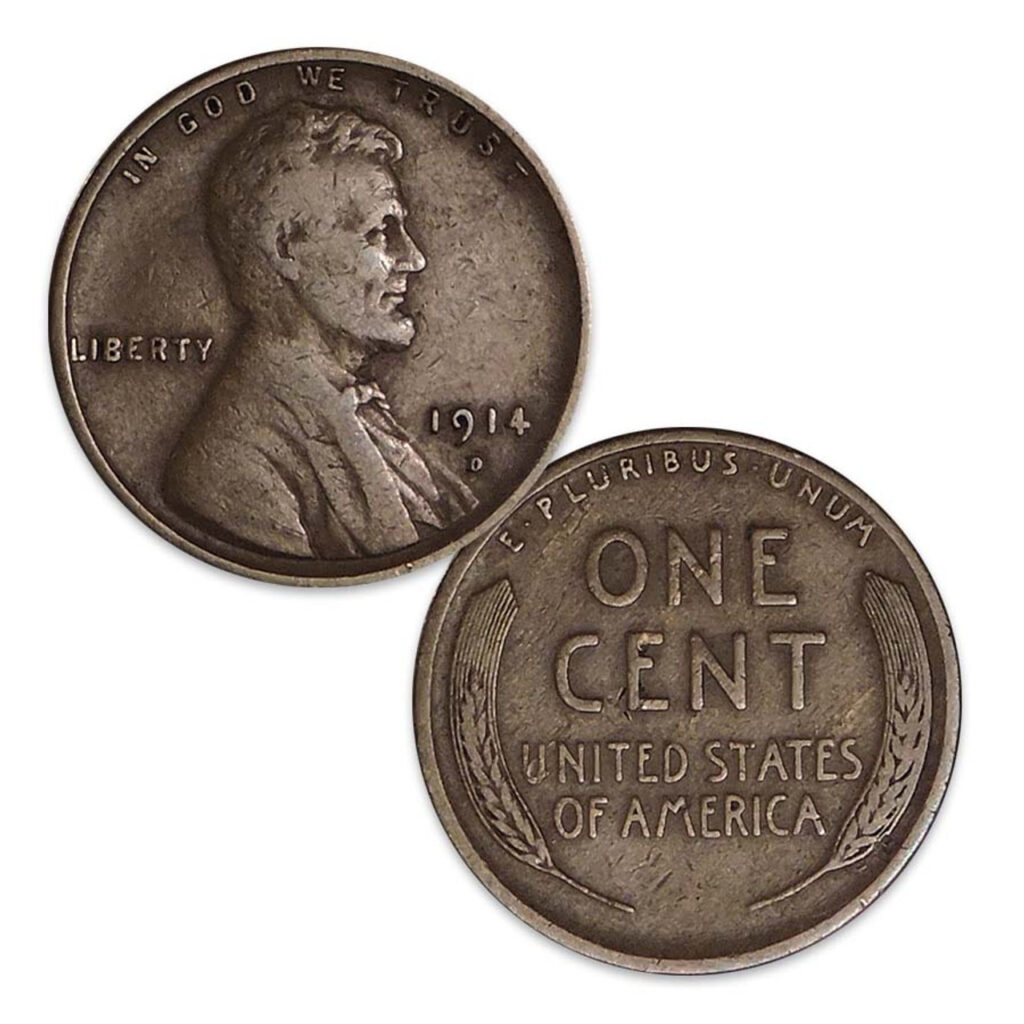
Copper coins, like the Lincoln cent, are highly reactive and prone to oxidation over time. Collectors categorize their color preservation into three main categories:
- BN (Brown): Most circulated coins fall into this group. The surface has darkened from exposure and wear.
- RB (Red-Brown): Shows a mix of original copper luster and brown toning.
- RD (Red): Retains nearly full mint brilliance — extremely rare for older coins.
A 1914-D penny with its original red color can be worth ten times more than a brown one of the same grade. That’s why collectors handle these coins with extreme care, often sealing them in airtight holders to prevent further oxidation.
How to Tell if You Have a Real 1914-D Penny

Because of its value, the 1914-D Wheat Penny is one of the most counterfeited coins in American history. Many fakes are simply altered 1944 pennies, with the extra “4” modified to look like a “1,” or 1914 pennies from the Philadelphia Mint (which lack a mint mark) that have a fake “D” added.
Here’s how to spot a genuine one:
- Check the Mint Mark Placement
- On a real 1914-D penny, the “D” mint mark sits just below and slightly to the right of the date.
- The mint mark should be crisp and evenly struck — not raised too high, off-center, or irregular in texture.
- Counterfeit coins often have “D” mint marks that look glued, stamped, or too sharp compared to the rest of the coin.
- Inspect the Date
- Look carefully at the “1.” Counterfeiters sometimes alter 1944 pennies by shaving the first “4” into a “1.” On authentic coins, the spacing and font are consistent with other early Lincoln cents.
- Weight and Metal Composition
- A genuine 1914-D penny weighs about 3.11 grams and is made of 95% copper, 5% tin and zinc.
- Modern counterfeits made from steel or other metals will differ slightly in weight and color.
- Use a Loupe or Magnifier
- Look for tool marks, seams, or color differences around the mint mark. These are telltale signs of tampering.
- Professional Authentication
- If you suspect you have the real thing, don’t clean or polish it. Submit it to a certified grading service like PCGS or NGC (Numismatic Guaranty Company).
- A professionally graded coin not only confirms authenticity but also dramatically increases resale value.
The 1914-D in Coin Collecting History

The 1914-D Wheat Penny is part of what collectors call the “Big Four” key dates in the Lincoln cent series — along with the 1909-S VDB, 1922 No D, and 1931-S.
Completing a Lincoln cent collection that includes all four of these key dates is a major milestone for any numismatist. And of the group, the 1914-D is arguably the hardest to find in high grades, due to its low mintage and heavy circulation.
It’s a coin that represents both history and artistry — a tangible link to early 20th-century America, when Lincoln’s legacy was being celebrated and when every penny really counted.
Fun Facts About the 1914-D Wheat Penny
- Mintage Oddity: The Denver Mint produced fewer cents in 1914 than almost any other year in the early Lincoln series.
- Saved by Kids: Many of the surviving examples today were collected by children in the 1930s and 1940s, when coin collecting became a national hobby.
- Counterfeiter’s Favorite: Experts estimate that more fake 1914-Ds exist than genuine ones, making authentication essential.
- A Coin of Transitions: The 1914-D was minted just before World War I — a time of economic change and modernization in America.
Why the 1914-D Still Captivates Collectors
Beyond its financial value, the 1914-D Wheat Penny embodies what makes coin collecting so exciting: the hunt for something extraordinary hidden among the ordinary. Its scarcity, historical charm, and the sheer improbability of finding one in circulation today make it legendary among both amateur and seasoned collectors.
It’s not just a coin — it’s a story of survival. Out of more than a million struck, only a fraction remain. Each one has passed through countless hands, witnessed decades of American life, and somehow endured the wear of time.
Could You Still Find One in Circulation?
While finding a 1914-D penny in modern circulation would be like winning the lottery, it’s not impossible. There have been cases where valuable wheat pennies have surfaced in estate collections, old piggy banks, or forgotten coin jars.
If you come across an old penny with a date from 1909 to 1958, don’t dismiss it. Check the back for the two wheat stalks and the front for the mint mark beneath the date. A small “D” in 1914 could make a world of difference.
And even if it’s not the 1914-D, other rare Lincoln cents — like the 1909-S VDB, 1922 No D, or 1955 Double Die — can still be worth hundreds or thousands of dollars.
Final Thoughts: A Penny That’s Priceless in History
The 1914-D Wheat Penny represents more than money — it’s a symbol of history, artistry, and the enduring fascination of discovery. From its low mintage and distinctive design to its remarkable survival against the odds, every detail tells a story that resonates with collectors a century later.
So the next time you’re counting change or cleaning out a dusty drawer, pause before you toss those old pennies aside. Among the dull copper coins, one might just be a forgotten fortune — a tiny relic of 1914 still gleaming with history and hope.