Every coin collector dreams of discovering a hidden treasure — a small, ordinary-looking coin that turns out to be worth a life-changing fortune. While most pennies jingling in pockets or gathering dust in jars are worth little more than face value, a few rare Lincoln cents have become legendary for their scarcity and value. Among them, certain versions of the Lincoln Wheat Penny have sold for staggering amounts — with some fetching up to $500,000 at auction.
But what makes a penny worth half a million dollars? And more importantly, how can you tell if you have one of these rare coins sitting unnoticed in your collection or change jar? Let’s dig into the fascinating story of America’s most famous penny and learn how to identify a true treasure among your coins.
The Lincoln Penny: A Century of History
The Lincoln cent was first introduced in 1909, marking the 100th anniversary of Abraham Lincoln’s birth. It was the first U.S. coin to feature the likeness of a real person, replacing the Indian Head cent. The design was created by Victor David Brenner, a talented sculptor whose initials, V.D.B., would later cause one of the biggest controversies in U.S. coin history.
The original Lincoln Wheat Penny, featuring Lincoln’s profile on the obverse (front) and two wheat stalks framing “ONE CENT” on the reverse, remained in circulation until 1958. After that, it was replaced by the Lincoln Memorial Cent (1959–2008) and later the Union Shield Cent (2010–present).
Yet, despite the many changes over the decades, some early and error varieties of Lincoln pennies remain among the most valuable coins in existence — and one of them could be worth up to half a million dollars.
The Penny That Can Fetch $500,000
When collectors talk about a Lincoln cent worth half a million dollars, they’re often referring to one of these legendary rarities:
- 1943 Copper Penny (wartime error)
- 1909-S VDB Penny (low mintage and removed initials)
- 1914-D Wheat Penny (scarce Denver mint issue)
- 1955 Double Die Obverse Penny (major minting error)
Of these, the 1943 Copper Penny is the one most commonly associated with six-figure prices, but several others have also reached astronomical values due to their rarity and historical context. Let’s take a closer look at what makes each of these coins special — and how to recognize them.
1. The 1943 Copper Penny – The Million-Dollar Mistake
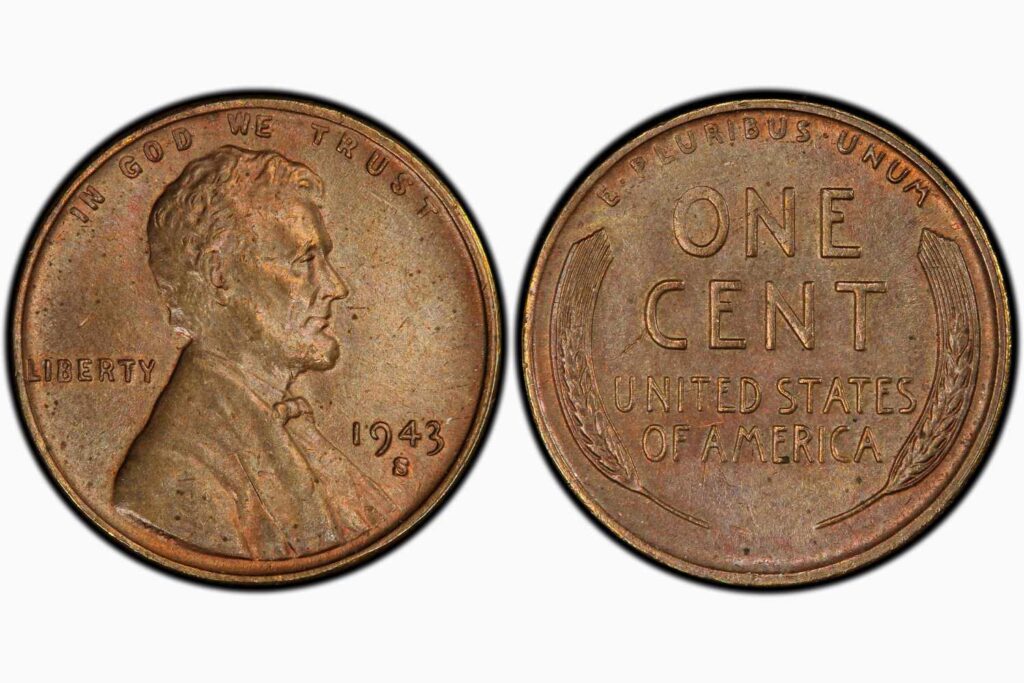
During World War II, the U.S. Mint shifted penny production from copper to zinc-coated steel to conserve copper for ammunition and military supplies. As a result, almost all 1943 Lincoln cents were made of steel — silvery in color and magnetic.
However, a small number of copper planchets (coin blanks left over from 1942) accidentally made it into the presses at the Philadelphia, Denver, and San Francisco mints. These rare 1943 copper pennies are genuine minting errors and are among the most famous coins in U.S. history.
How to Identify One:
- Date: 1943
- Color: Reddish-brown copper (not silvery steel)
- Magnet Test: Will not stick to a magnet (steel pennies will).
- Weight: About 3.11 grams (steel versions weigh only 2.7 grams).
Value:
- Circulated: $60,000–$150,000
- Uncirculated: $250,000–$500,000+
- Record Sale: A 1943-D Bronze Penny sold for $1.7 million in 2010.
If your 1943 penny doesn’t stick to a magnet, you could be holding one of the rarest coins in the world.
2. The 1909-S VDB Penny – The Controversial First Edition

The very first year of the Lincoln cent’s release brought controversy. Designer Victor David Brenner included his initials, V.D.B., prominently on the bottom of the reverse. Some officials and members of the public objected, claiming it was too much self-promotion.
The U.S. Mint quickly removed the initials, making the coins with “V.D.B.” on the back extremely scarce. Adding to the rarity, the San Francisco Mint produced only 484,000 of these coins before the change.
How to Identify One:
- Date: 1909
- Mint Mark: Small “S” under the date
- Initials: “V.D.B.” at the bottom center of the reverse side, between the wheat stalks.
Value:
- Good (G-4): Around $700–$900
- Uncirculated (MS-65): $3,000–$10,000
- Gem Red (MS-67+ RD): Up to $800,000 at auction.
This coin remains a “must-have” for serious collectors and one of the most valuable coins in U.S. circulation history.
3. The 1914-D Wheat Penny – The Denver Rarity

The 1914-D Lincoln Cent is another holy grail for collectors. Only 1,193,000 were minted at the Denver Mint — an incredibly low number compared to tens of millions from Philadelphia that same year. Most were heavily circulated, and very few remain in high-grade condition.
How to Identify One:
- Date: 1914
- Mint Mark: A small “D” below the date (watch out for fakes with added mint marks).
- Color: Original copper-red or brown tone.
Value:
- Good (G-4): $200–$300
- Extremely Fine (EF-40): $1,500–$2,000
- Uncirculated (MS-65 RD): $20,000–$50,000
- Gem Grade: Up to $150,000–$250,000
The 1914-D is one of the hardest Wheat Pennies to find in pristine condition — a true key date for Lincoln cent enthusiasts.
4. The 1955 Double Die Obverse Penny – A Dramatic Minting Error
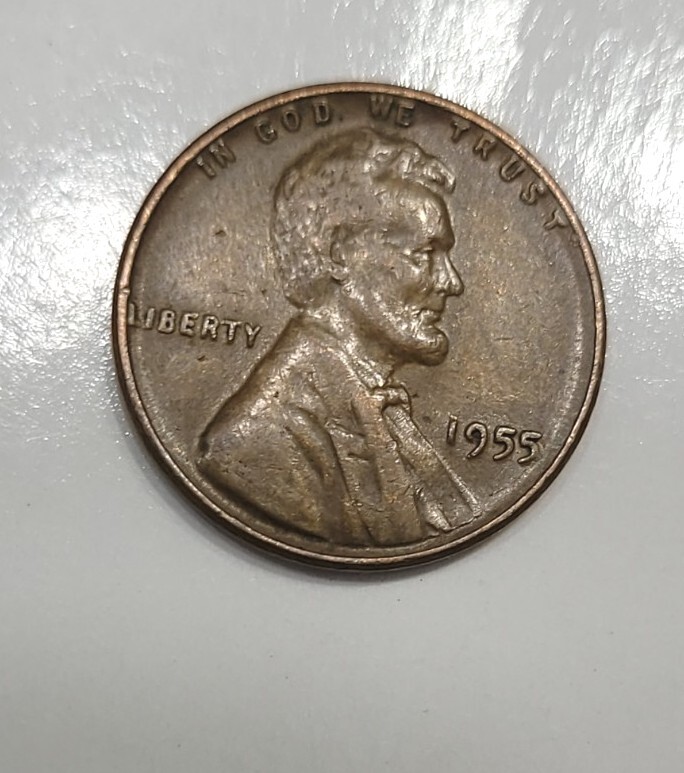
Minting errors can sometimes produce coins that are wildly unique — and collectors love them. The 1955 Double Die Obverse penny is one such error, caused by a misalignment in the minting process that led to a doubled image on the front of the coin.
When you look at the date and lettering — especially “LIBERTY” and “IN GOD WE TRUST” — you’ll see clear doubling with the naked eye.
How to Identify One:
- Date: 1955
- Doubling: Obvious double lines on the date and lettering on the obverse side.
- Mint Mark: None (Philadelphia issue).
Value:
- Circulated: $1,000–$2,500
- Uncirculated (MS-63+): $15,000–$50,000
- Top Condition: Up to $288,000 for a flawless example.
Because the doubling is so pronounced, this coin is one of the easiest major mint errors to identify — and one of the most famous.
How to Tell If Your Penny Is Valuable
Finding a rare Lincoln cent can be thrilling, but before you get too excited, it’s essential to verify its authenticity. Many valuable pennies are heavily counterfeited or altered. Here are key steps to help you identify a true treasure:
- Check the Mint Mark and Date
- Rare pennies often come from specific years and mints. Look closely under the date for mint marks like “S” (San Francisco) or “D” (Denver).
- Watch for altered mint marks — counterfeiters sometimes add them to common coins.
- Weigh the Coin
- Use a digital scale. Authentic pre-1982 copper pennies weigh around 3.11 grams, while steel or zinc coins weigh less.
- Magnet Test
- If your 1943 penny is copper-colored but sticks to a magnet, it’s not rare — it’s steel.
- Check for Doubling or Errors
- Look for doubled letters, numbers, or misaligned features under magnification.
- Get Professional Grading
- Submit your coin to a reputable grading service such as PCGS or NGC. They will verify authenticity, assign a grade, and encapsulate the coin for protection.
- Don’t Clean the Coin!
- Cleaning a coin can remove its natural patina and reduce its value by up to 90%. Always handle coins carefully by the edges.
Why These Pennies Are So Valuable
The enormous value of rare Lincoln cents comes down to three main factors:
- Scarcity: Some were minted in very small numbers or by mistake, making them incredibly rare.
- Condition: Uncirculated or “gem” examples are exponentially more valuable than worn ones.
- Historical Significance: Many of these coins were produced during significant periods in U.S. history, adding to their appeal.
For collectors, these pennies represent not just financial value but a tangible link to America’s past — moments of artistry, wartime production, and evolving minting technology.
Where to Look for Rare Pennies
Believe it or not, valuable pennies still turn up in the most unexpected places:
- Old Coin Jars or Piggy Banks – Many families have jars of wheat pennies saved from decades past.
- Estate Sales & Flea Markets – Sometimes sold cheaply in bulk lots.
- Bank Rolls – Some collectors still hunt through rolls of pennies, known as “coin roll hunting.”
- Inherited Collections – Older relatives may have unknowingly preserved rare coins.
Even if you don’t find a $500,000 treasure, you might uncover coins worth hundreds or thousands of dollars — and the thrill of the hunt makes it all worthwhile.
Final Thoughts: A Fortune in Your Pocket
The idea that a humble one-cent coin could be worth a house or a car seems unbelievable — but in the world of coin collecting, it happens all the time. Whether it’s a 1943 copper error, a 1909-S VDB, a 1914-D, or a 1955 double die, these rare Lincoln pennies prove that small details can lead to enormous rewards.
So, before you dismiss that old penny as pocket change, take a closer look. Under the right circumstances, that little copper coin could be a half-million-dollar piece of history — waiting for you to discover it.