Among the most fascinating stories in American coin collecting, few rival the legend of the 1943 Copper Lincoln Cent — a coin so rare and valuable that it has sold for over $1 million at auction. For coin enthusiasts and everyday treasure hunters alike, this small copper disc represents one of the most famous minting errors in U.S. history. Understanding how this coin came to be, why it’s worth such a fortune, and how to tell a real one from countless counterfeits is essential for anyone hoping to strike numismatic gold.
The Story Behind the 1943 Copper Penny
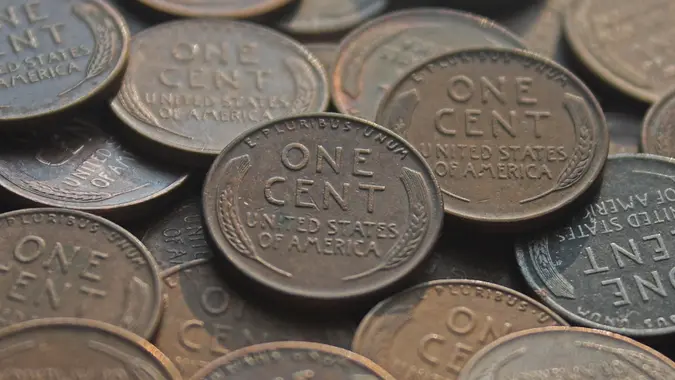
To understand the 1943 copper penny, you need to step back into the context of World War II. During the war, copper was considered a critical material — used extensively in ammunition, shell casings, electrical wiring, and military communications. The U.S. Mint, seeking to conserve copper for the war effort, decided to change the composition of the penny.
Starting in 1943, all Lincoln cents were struck not from copper, but from zinc-coated steel. These “steel cents,” often called white pennies, had a shiny, silvery appearance and were magnetic due to their iron core. Over a billion of these steel pennies were minted across Philadelphia, Denver, and San Francisco — making them very common today.
However, by a remarkable accident, a few copper planchets (the blank discs used to make coins) from 1942 remained stuck in the minting machinery. When the presses started striking the 1943 steel cents, a handful of these leftover copper planchets were fed through the presses by mistake. The result? A small number of genuine 1943 Lincoln Cents struck in bronze (copper and tin alloy) — one of the rarest and most valuable mint errors in U.S. coinage.
How Many 1943 Copper Pennies Exist?

Estimates vary, but experts believe that only about 40 to 50 genuine 1943 copper cents were ever struck — the vast majority at the Philadelphia Mint, with only a few known examples from Denver (1943-D) and San Francisco (1943-S).
The 1943-D copper penny, in particular, is considered the rarest of them all, with only one confirmed specimen known to exist. This unique coin has been dubbed the “Holy Grail” of Lincoln Cents, commanding prices well above the million-dollar mark whenever it appears for sale.
Even the more “common” 1943 copper pennies from Philadelphia regularly fetch six-figure sums. In 2019, for example, a 1943 bronze cent graded MS63 by PCGS (Professional Coin Grading Service) sold at auction for $204,000. Another in near-perfect condition brought $1.7 million in a private sale.
How to Tell if You Have a Real 1943 Copper Penny
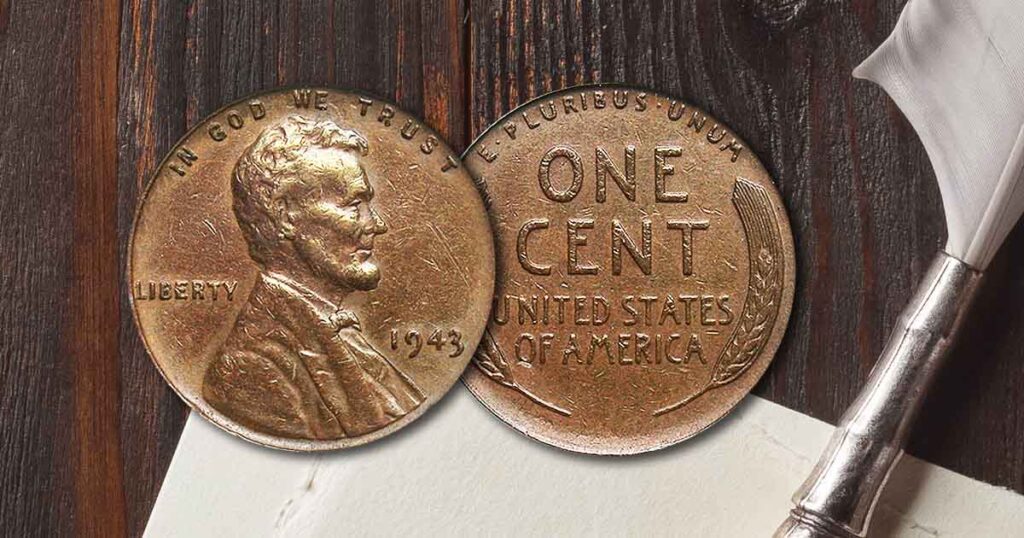
Because of the coin’s fame and immense value, there are many counterfeit 1943 copper pennies floating around — often altered steel cents or modified coins from other years. Here’s how to tell if your penny might be the real deal:
- Check the Magnet Test
The simplest and most reliable first step is to see if the coin sticks to a magnet.- A genuine 1943 steel cent will be magnetic.
- A genuine 1943 copper cent will not be magnetic.
If your coin attracts a magnet, it’s made of steel and therefore not rare.
- Look Closely at the Date
Counterfeiters sometimes alter 1948 copper pennies by grinding down the 8 to look like a 3. Examine the last digit of the date under magnification — the shape of the “3” should be consistent and show no tool marks or distortions. - Weigh the Coin
The real 1943 copper cent weighs about 3.11 grams, while the steel cents weigh closer to 2.7 grams. If you have access to a precise digital scale, this test can help confirm or rule out authenticity. - Check the Color and Surface
Genuine copper pennies from this era have a warm reddish-brown tone, while steel cents have a dull gray or silver color. Be cautious, though — some counterfeits are copper-plated steel, which can mimic the look but will still stick to a magnet. - Seek Professional Authentication
If your coin passes these tests, it’s worth submitting it to a reputable grading service like PCGS or NGC (Numismatic Guaranty Company). They have the expertise and equipment to verify authenticity and assign a grade, which dramatically affects the coin’s value.
Why the 1943 Copper Penny Is So Valuable
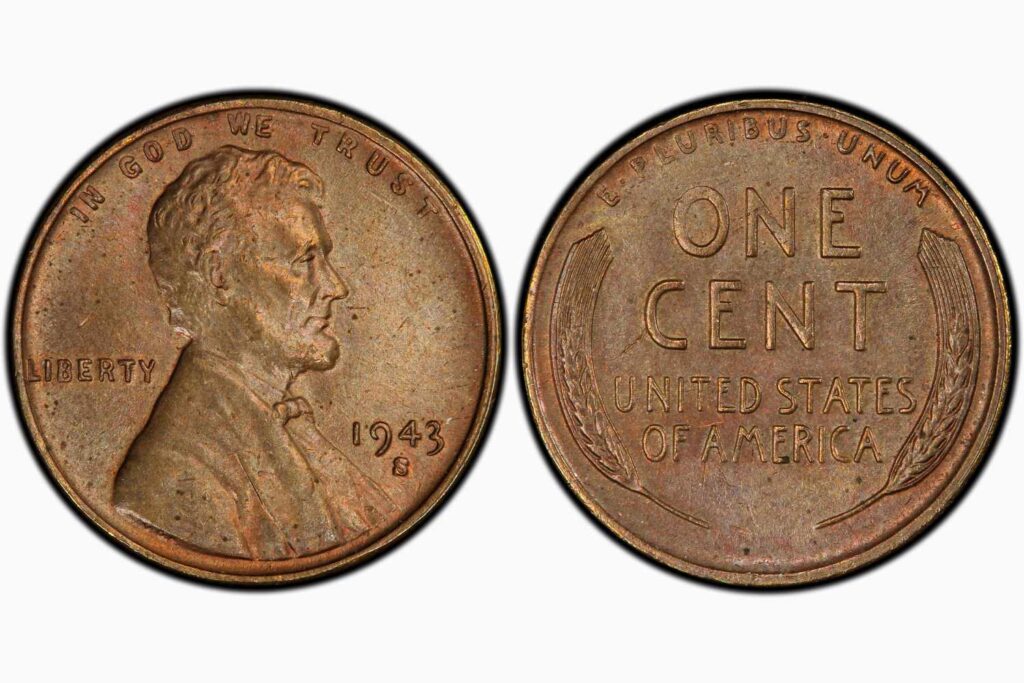
The immense value of the 1943 copper penny lies in its rarity, its historical context, and its story. Unlike many collectible coins that were deliberately struck in small numbers, these were created purely by accident — an unintentional mint error that slipped through quality control during wartime production.
Collectors are drawn not just to its scarcity, but also to the intrigue of owning a piece of history that shouldn’t even exist. It’s a tangible artifact of America’s wartime economy and a symbol of how even small oversights can create legendary treasures.
In the world of numismatics (coin collecting), rarity is the foundation of value. Combine that with strong collector demand, historical importance, and condition — and you have the perfect storm for a million-dollar coin.
Famous Sales and Owners
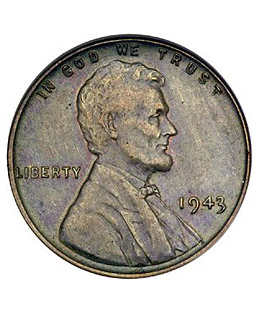
Several 1943 copper pennies have made headlines over the years:
- 1943-D Bronze Cent – The only known specimen, discovered by a 14-year-old in 1947, was sold in 2010 for $1.7 million.
- 1943 (Philadelphia) Copper Penny – One sold at Heritage Auctions in 2019 for $204,000.
- 1943-S Bronze Cent – Fewer than half a dozen are known; one brought $504,000 at auction in 2020.
These coins have often been held in private collections or donated to museums, making them even harder for the average collector to find. Still, the idea that one could be hiding in an old penny jar keeps the dream alive for many.
The Legacy of Lincoln Cents
The Lincoln cent, first introduced in 1909 to commemorate Abraham Lincoln’s 100th birthday, remains one of the most beloved and enduring designs in U.S. coinage. Over the decades, it has seen several changes in composition and reverse design — from the Wheat Ears (1909–1958) to the Lincoln Memorial (1959–2008) and the more recent Union Shield (2010–present).
Within this long history, a handful of issues have achieved near-mythic status among collectors — including the 1909-S VDB, the 1922 No D, and, of course, the 1943 Copper Cent. Each tells a story of minting quirks, historical context, and human fascination with rarity.
Tips for Spotting Other Rare Lincoln Cents
While the 1943 copper penny is the crown jewel, there are several other Lincoln cents that can be worth hundreds or even thousands of dollars. Keep an eye out for these:
- 1909-S VDB – The first year of issue, with designer Victor D. Brenner’s initials on the reverse. Only 484,000 were minted.
- 1914-D Lincoln Cent – A key date in the early series, often worth several thousand dollars in good condition.
- 1922 “No D” Penny – A rare error where the Denver Mint mark was accidentally omitted.
- 1955 Double Die Obverse – A famous variety where the date and lettering appear strongly doubled.
- 1972 Double Die – Another doubled-die issue, though not as dramatic as the 1955, still valuable in higher grades.
Final Thoughts: The Allure of the 1943 Copper Penny
Finding a genuine 1943 copper penny is the numismatist’s dream come true — the equivalent of winning the lottery in the world of coin collecting. Its million-dollar value is not just a reflection of its rarity, but of the human stories, historical moments, and sheer luck that accompany its existence.
If you ever stumble upon an old jar of pennies or inherit a collection, take the time to look closely. You never know — among the tarnished coins and common cents, there might just be a wartime relic worth a fortune waiting to be discovered.
For collectors, historians, and dreamers alike, the 1943 copper penny remains a shining reminder that sometimes, the smallest pieces of metal can hold the greatest value.